

6 Creative Ways to Build Better Habits Starting Right Now
Most advice about habits focuses on discipline or motivation, but in real life those aren’t the only things that make habits stick. What actually works is making the behavior easier to start, harder to avoid, and more naturally part of your day. When habits require too much motivation, planning, or effort to start, they usually don’t survive long. The key is to make them simpler, more automatic, and easier to repeat.
To help you get started, we’ve put together a list of simple but effective strategies that can make building better habits feel a lot more manageable.
1. Start smaller than you think you need to
Most habits fail because people define them too big from the beginning. If a habit feels heavy, your brain will delay it. A better approach is to make the “starting version” extremely small:
- Instead of “work out,” start with putting on workout clothes
- Instead of “write,” start by opening the document
- Instead of “organize,” start by clearing one small area
This works because starting is usually the hardest part. Once you’ve started, continuing is much easier.
2. Connect new habits to things you already do
You don’t need to build habits from scratch. You can attach them to existing routines:
- After coffee → check your priorities for the day
- After brushing your teeth → prepare tomorrow’s clothes or bag
- After taking a seat at your desk → open your task list
- After dinner → clear one small area in the kitchen
This removes the need to remember or decide. The habit is built into an action that already happens naturally.
3. Make the good option the easy option
Your environment often has a greater influence on your behavior than motivation alone. When something is easy to access and requires little effort to begin, you’re naturally more likely to do it consistently. That’s why it helps to focus not only on self-discipline, but also on creating an environment that supports the habits you want to build. So instead of relying on self-control:
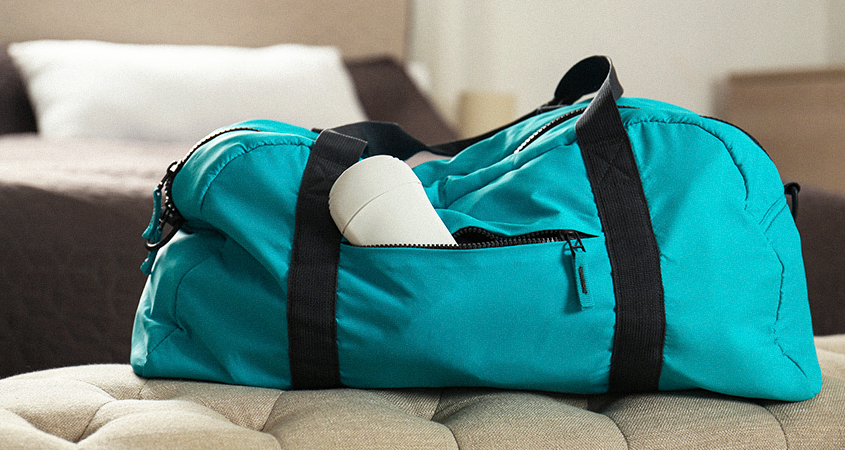
- Leave important items visible (book, water bottle, gym bag, notebook)
- Reduce steps between you and the habit
- Put distractions slightly out of reach
You’re not forcing behavior, you’re shaping it.
4. Give yourself a “minimum version” for bad days
Consistency matters more than intensity when building habits. If you only stick to them when you feel motivated or have a lot of energy, they usually don’t last. A better approach is to have a lighter version of the habit for low-energy days, so you keep the rhythm going even when things aren’t perfect:
- A 10-minute walk instead of a full workout
- One paragraph instead of a full writing session
- Clearing one small surface instead of a full clean-up
5. Track it, but keep it basic
6. Don’t rely on “feeling like it”

